Piece of rope
A Pale View of HillsThe Piece of rope is an inconspicuous object that becomes charged with unease during the narrator’s nighttime search for Mariko. It tangles around the narrator’s ankle in the riverside grass, but Mariko’s repeated questions about it and her visible fear make the explanation feel insufficient to her, if not to the reader. The encounter leaves the rope’s meaning unresolved: its physical presence is plain, while the significance Mariko gives it is not.
Appearance and Discovery
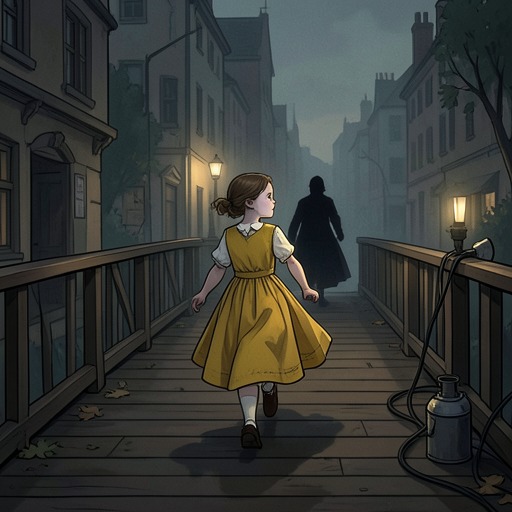
The narrator is searching beside the river at night and cannot be sure how long the search lasts. Because she is advanced in pregnancy, she avoids hurrying; walking by the water also feels strangely peaceful. The bank’s grass has grown tall enough for her to remember its feel against her feet, and insects sound around her as she walks. In this quiet setting, the rope first announces itself not by sight but by sound: it rustles behind her like a snake moving through the grass.
On stopping to listen, the narrator realizes that an old piece of rope has caught around her ankle and has been dragged along. She carefully frees it. In the moonlight, it feels damp and muddy between her fingers. These details establish the object as ordinary and physically specific—old, dirty, and accidentally entangled—while the snake-like sound briefly makes it seem threatening before its mundane cause is known.
The Encounter with Mariko
When the narrator looks ahead, Mariko is sitting in the grass beneath a willow, her knees drawn up to her chin. The narrator approaches until she can make out Mariko’s face. Mariko’s first question is about the object: “What’s that?” The narrator answers, “Nothing. It just tangled on to my foot when I was walking.” The explanation is direct, but it does not end Mariko’s attention to the rope.
As the narrator comes closer, Mariko asks again why she has it. The narrator repeats that it caught on her foot, then turns the questioning toward Mariko, asking why she is behaving strangely and noticing that Mariko has made a strange face. Mariko denies doing so and returns to the same question: “Why have you got the rope?” The repetition gives the object a force beyond its accidental arrival. The narrator sees signs of fear appearing on Mariko’s face, yet neither explains what Mariko believes the rope means.
The Question Left Open
The exchange shifts abruptly when Mariko asks whether the narrator wants a kitten. The narrator says she does not think so and asks what is wrong. Mariko gets to her feet; as the narrator reaches the willow, Mariko runs off into the darkness. The cottage is only a short distance away, its roof darker than the sky. The rope remains in the scene, but the conversation ends without clarifying Mariko’s fear or connecting it explicitly to the kitten question.
That uncertainty is central to the object’s narrative role. The narrator offers a plausible account of how the rope came to be in her hand, and the account is supported by the physical circumstances: it snagged her ankle as she walked through tall grass. Mariko’s insistence does not disprove this explanation, but it makes the rope emotionally consequential. The reader is left with a sharp contrast between an object the narrator treats as nothing and a question Mariko cannot let go. The scene does not establish that the rope has been used for anything else; its significance rests instead in the unease surrounding it and in the fear that persists after its origin has been explained.